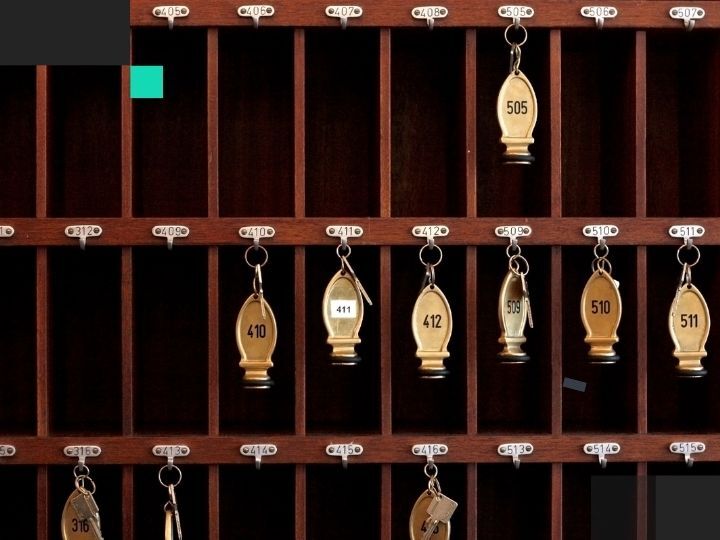
A hotel room key is a tiny piece of plastic with an enormous amount of trust attached to it.
Guests assume that if someone asks reception for access to their room, there is a robust process standing between that request and the door opening.
That assumption matters more than the technology.
The most sophisticated electronic lock in the world becomes fairly useless if the process for issuing a replacement key can be defeated by a convincing conversation at reception.
That uncomfortable point is now firmly on the hotel industry’s agenda following the publication of an independent review into Travelodge’s room access security policies and procedures.
Published on 1 October 2026 and led by Paul Greaney KC, the review followed a serious sexual assault at a Travelodge hotel in Maidenhead in 2022. The perpetrator had obtained a key card to the guest’s room by deception after falsely claiming to be her boyfriend. Travelodge
The circumstances are particularly serious, but the wider lesson for hotel operators is relatively simple:
Hotel room security is not only about locks, doors and key cards. It is about the process used to decide who should have access in the first place.
 Hotel room key security is about more than the key card
Electronic room keys have transformed hotel access control.
They can be programmed, cancelled, time-limited and restricted to individual rooms. Modern systems can also provide records of when credentials were created and used. But the security of a hotel room does not begin at the bedroom door.
It begins earlier, when someone asks to be given access.
That makes hotel room key security as much a process issue as a technology issue.
The important questions are not simply whether the card works or whether the lock is secure. They are whether the hotel has a consistent method for verifying who is requesting access, whether exceptions are handled properly and whether staff know what to do when something does not feel right.
A secure door can only be as effective as the process that governs who is given access to it.
The Travelodge review brings hotel key security into focus
Travelodge commissioned the independent review to examine its room access security arrangements, the handling of serious incidents and the controls surrounding guest-room access.
Following the review, the company has introduced a number of changes to its hotel key security procedures. These include stronger controls around additional and replacement keys, staff training, auditing and testing of procedures.
That response is significant because it highlights something that applies across the industry; replacement keys are issued every day.
Guests lose cards. Keys stop working. Families need additional access. Colleagues arrive separately. Guests change rooms.
Most requests are entirely legitimate.
But because the process is so routine, it can be easy to forget that each request is also an access-control decision.
 Why hotel key management depends on verification
Good hotel key management is often associated with physical control; who has the master key? Where is the spare key stored? Has an access card been returned?
Those questions matter, particularly for back-of-house operations and restricted areas. But guest-room access introduces another layer: identity and entitlement.
A person standing at reception may know the guest's name. They may know the room number. They may appear credible.
None of those things necessarily proves that they should be given access. This is where verification becomes important.
Hotels need clear procedures that help staff establish whether someone is authorised to access a room, particularly when issuing an additional or replacement key.
The objective is not to make reception feel like passport control. It is to make sure that convenience does not quietly override security.
Hotel access control is only as strong as the process around it
Much of the conversation around hotel access control naturally focuses on technology.
Electronic locks, mobile credentials and integrated access systems can all improve security. But technology controls the credential. Operational processes decide who receives it.
That means the strongest hotel access control system can still be undermined if procedures around issuing credentials are inconsistent.
For hotel operators reviewing their own processes, useful questions include:
-
What information must be verified before a replacement or additional key is issued? Are there clear rules for situations where identification is unavailable? Do staff know when a request should be escalated? Are unusual or exceptional access requests recorded? Can managers later establish who authorised access and why? Do employees understand that issuing a room key is a security decision as well as a customer-service task?
The answers may vary between brands, properties and operating models.
The important thing is that the answers exist.

Hotel room access control has to work during real hotel operations
Policies are generally written in calm offices. Hotels are rarely calm offices.
Reception may be dealing with a queue of guests, a late arrival, a complaint, a contractor and a ringing phone simultaneously.
Night teams may have fewer people available. Weekend staffing may be different. Agency staff may be covering shifts. A guest may be frustrated because they simply want to get back into their room.
That is the environment in which hotel room access control procedures have to work.
A process that only works when everyone has plenty of time is not a particularly robust process.
Good procedures therefore need to be simple enough to follow consistently, while giving employees a clear route for escalation when a request does not fit the normal pattern.
Hotel key card security needs evidence as well as policy
The Travelodge review also raises a wider question for hotel operators; how do you know that an important security procedure is actually being followed?
Writing a policy is relatively straightforward. Proving that the policy survives contact with everyday hotel security operations is harder.
That is why hotel key card security can benefit from regular review.
Hotels may use supervisory checks, audit records, access logs, staff training records, mystery shopping or incident reviews to understand whether procedures are working consistently.
This is not about creating paperwork for the sake of paperwork. It is about visibility.
If an unusual decision is made, the organisation should be able to understand what happened and why.
That principle applies far beyond guest-room keys.

Room keys are part of a wider hotel security process
The renewed attention on room-access procedures also illustrates how interconnected hotel security has become.
A replacement key request may initially look like a reception issue. But depending on the circumstances, it could also involve safeguarding, harassment, stalking, domestic abuse or another security concern.
That means hotel room security should not sit in isolation.
Room access procedures need to connect with incident reporting, staff escalation, guest protection and wider security operations and policies.
The key itself may only be the first step in the process.
What should hotel operators and security teams review?
The independent review does not mean every hotel needs to adopt identical procedures.
Different hotels have different systems, staffing models and risk profiles.
But the current attention around hotel room key security provides a useful reason to test existing arrangements. Hotels may want to review:
-
how initial room keys are issued; how replacement and additional keys are requested; what verification is required; how exceptions are handled; when staff should escalate a request; whether unusual access decisions are recorded; how room-access incidents are investigated; how regularly procedures are tested or reviewed.
The useful question is not simply: Do we have a policy?
It is: Would that policy still work at 11pm on a busy Saturday night?
That is usually a much harder test.