
Hotel Security Incident Report Template
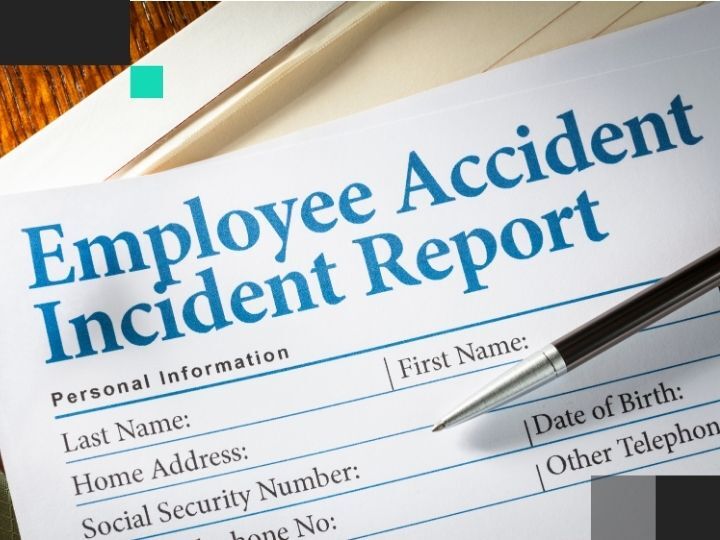
When a security event needs formal escalation, a few lines in a daily log are rarely enough.
This hotel security incident report template provides a structured way to document what happened, who was involved, how the incident was handled, what evidence exists and what follow-up is still required.
The template is available as an editable Word document so it can be adapted to your hotel’s own reporting process.
Download the editable Incident Report Word Template
What is an incident report template?
An incident report template is a structured form used to create a clear, consistent record of a significant event.
Unlike a daily occurrence log, which captures routine activity across a shift, an incident report focuses on one specific event in more detail.
It should help teams record:
- what happened, when and where it happened
- who was involved
- what immediate action was taken, who was notified
- what evidence exists
- what follow-up is required
- how the incident was eventually closed
The aim is to create a record that can be understood later without relying on memory or informal handover.
More indepth solutions, such as Incident Managmenet Systems, offer the ability to do this at scale and managed centrally.
When should a hotel create an incident report?
Not every occurrence needs a full incident report, some can be recorded in a Daily Occurence Log.
Hotels should use their own escalation thresholds and procedures, but an incident report may be appropriate where an event is more serious, requires investigation, involves external agencies, creates ongoing risk or needs formal management follow-up.
Examples might include:
- theft or suspected criminal activity
- unauthorised access and security breaches
- significant guest or staff safety concerns, such as violence or aggressive behaviour
- emergency-service attendance
- events requiring CCTV or witness evidence
- incidents requiring management escalation, such as serious property damage
- issues that remain open after the initial response
The key distinction is that an occurrence may simply need to be recorded, while an incident needs to be actively managed.
What should a security incident report include?
A useful security incident report form should capture enough detail to explain the event from start to finish. Typical sections include:
1. Incident identification
Basic information such as:
- hotel or property name and incident reference
- date, time and location
- person reporting the incident
- officer completing the report
- incident category
- priority or severity
2. Incident summary
A clear factual description of what happened and how the incident first came to attention.
3. People involved
Relevant details about guests, staff, contractors, visitors, witnesses or other people involved.
Only information that is necessary for the incident record should be collected.
4. Immediate response
What action was taken at the time?
This might include securing an area, assisting a guest, separating individuals, contacting management, preserving evidence or requesting emergency support.
5. Escalation and notifications
A clear record of who was informed, when they were informed and what response followed.
6. Security evidence
References to supporting material such as:
- CCTV footage or photographs
- witness statements
- access records
- key or card records
- related documentation
The incident report should record where evidence exists rather than unnecessarily reproducing sensitive material within the form itself.
7. Follow-up actions
Any action that remains outstanding should have a clear owner, due date and status.
8. Incident review and closure
The report should show when the incident was reviewed, whether further action was required and when the case was formally closed.
For businesses managing multiple sites that need a scalable solution, an Incident Managmenet System is a great solution.
Incident report example
A useful incident report should be factual, specific and easy to understand. Too vague:
"Guest disturbance in bar. Security attended."
This records that something happened, but leaves too many unanswered questions.
A stronger entry would be:
"At 22:35, security attended the lobby bar following a report of aggressive behaviour between two guests. The individuals were separated and the duty manager attended. One guest was asked to return to their room. No injuries were reported and the area returned to normal operation."
The second version provides a clearer record of what happened, when it happened, who responded, what action was taken and the immediate outcome.
Good incident reporting is not about writing more. It is about recording the information that matters.
Incident management: how they link to a daily occurrence log
A Daily Occurence Log and an incident report serve different purposes.
The daily occurrence log provides a running record of routine activity across the shift. Where an event meets the hotel’s escalation threshold, a separate incident report can then be created to capture the event in more detail.
The incident template includes space for a related DOL reference so the two records can be linked without duplicating unnecessary information.
This creates a simple workflow:
Occurrence recorded → escalation required → incident report created → actions managed → incident reviewed and closed
Download the incident report template in Word
The Hotel Security Incident Report Template is available as an editable Word document and a print-ready PDF.
Use it as a starting point for creating a consistent incident reporting process across your hotel.
Download the editable incident report template (.docx)
Download the print-ready incident report template (.pdf)
This template is a general operational resource and should be adapted to your hotel’s own procedures, reporting thresholds, data-retention requirements and applicable legal or regulatory obligations.